
Updated: Sep 17
Marseille
Ports have always been places of arrival. Built on trade with the world, port cities attract people from around the globe. Communities that take root there are more cosmopolitan and outward-looking than those in inland towns.
The Immigrant Times has launched a new series, Immigrant Cities, which explores how immigration has influenced some of the world’s major cities: their neighbourhoods, cultures, conflicts, and characters. We start with Buenos Aires, New Orleans, Marseille, Rotterdam and Liverpool
(This article was also published in French)

Marseille, the second-largest city in France, is the most multicultural city in the country. The Quartiers Nord, Marseille’s banlieue, are the place where Marseille’s immigration history and its social failures converge most visibly. For the immigrants from the Comoros, Marseille is the ’fifth island’ of the archipelago. Armenians, who fled the genocide of the Ottoman Empire, built, with remarkable speed, the institutions of a community in exile, including the Armenian Apostolic Church in Beaumont.
Introduction
July 2026: The founding legend of Marseille is one of the oldest immigration stories in Europe. Around 600 BC, a Greek sailor from Phocaea, a port on the Aegean coast of what is now Turkey, landed at a natural inlet on the southern shore of Gaul. His name, in the version passed down by ancient writers, was Protis. He arrived, so the story goes, on the very day that the local Ligurian chief was holding a feast to choose a husband for his daughter Gyptis. She was given a cup of wine to present to her chosen man. She gave it to the Greek. They married, founded a city, and called it Massalia.
Whether or not the story is true in its details, it captures something real about the place. Massalia became one of the greatest ports of the ancient Mediterranean world, a city that was, from its very origin, always the product of encounters between peoples. It is now called Marseille, France’s second-largest city and its oldest, a metropolis of around 870,000 people on the arc of the Mediterranean coast where Europe faces Africa across a hundred miles of sea. It remains, in the words repeatedly used of it over twenty-six centuries, a gateway between Europe and the Arab world, between the old continent and the African coast, between one civilisation and the next.
No French city has been so continuously and so variously shaped by immigration across so many centuries. Greeks, Romans, Genoese merchants, Armenian silk traders, Italian labourers, Armenian genocide survivors, Spanish Republicans, Algerian workers, pieds-noirs, Comorian sailors, and dozens of other communities have each left their mark on the city’s neighbourhoods, its accent, its politics, and its food. The bouillabaisse, Marseille’s celebrated fish stew, is itself an immigrant dish, assembled from whatever the fishermen of many different backgrounds brought back from the sea.
Ancient roots and early cosmopolitanism
Massalia flourished as a Greek polis for six centuries before it became Roman. At its height it was one of the most significant ports in the western Mediterranean, a city-state with its own colonies, its own currency, and a commercial reach that extended from Spain to the Black Sea. The ancient Greeks introduced to the region the olive, the vine, and the concept of the market town; elements of Provençal culture that persist to the present day. The city allied with Rome during the Punic Wars, maintained a degree of independence for centuries, and was finally absorbed into the Roman Empire in 49 BC, after backing the wrong side in Caesar’s civil war.
Christianity arrived early: Marseille has an unbroken episcopal succession from the 3rd century, and according to Provençal tradition, Mary Magdalene herself evangelised the city with her brother Lazarus. Through the medieval period, the city changed hands repeatedly: the Visigoths, the Franks, the counts of Provence, and the Angevins, while maintaining its essential character as a trading port on the road between western Europe and the East.
By the late 18th century, half the population was not native Marseillais. Among the main groups of non-French residents were Italians, principally Genoese and Piedmontese; Gavots (peasants from the Alpine valleys); Spaniards; Greeks; and Levantines, a term that covered Syrians, Armenians, and others from the eastern Mediterranean. Sephardic Jews, expelled from Spain and Portugal during the Inquisition and drawn to the city’s relative tolerance, had established themselves as merchants and bankers. Armenian traders had been present even longer: after Armenian merchants gained a monopoly over Iranian silk in the 16th century, they developed strong commercial ties with Marseille, and under trading privileges granted by both Cardinal Richelieu and Jean-Baptiste Colbert, who declared Marseille a free port in 1669, the Armenian commercial community became prosperous and well-established.
The colonial hinge came in 1830, when France invaded Algeria. From that moment, Marseille became the essential link between metropolitan France and its expanding empire in Africa and Asia. The opening of the Suez Canal in 1869 amplified this role: the city became the principal gateway between Europe and the East, its docks busier than ever, its population more diverse than ever. It was a prosperity built on colonial trade, sugar, cotton, oil, spices, and, as in Liverpool and Rotterdam, on routes and relationships that would later carry people as well as goods.
The city Italians built
(19th century to the mid-20th century)
The dominant immigration story of 19th-century Marseille is Italian. It begins with Piedmontese and Ligurian labourers arriving to work in construction and on the docks, and it accelerates through the century as agricultural poverty, political upheaval, and the Risorgimento (unification of Italy) push successive waves of northern Italians southward and westward. By the turn of the 20th century, Italians were the single largest foreign group in the city by a substantial margin.
In the first half of the 20th century, at the peak of this community’s presence, people of Italian origin made up roughly a third of Marseille’s population, an extraordinary concentration that shaped the physical fabric and the social character of the city as thoroughly as the Irish shaped Liverpool.
Italian immigrants settled across the city but concentrated particularly in Le Panier, the old quarter above the Vieux-Port, whose name means ‘the basket’ and whose narrow streets were the original heart of ancient Massalia, and in the working-class district of La Belle-de-Mai, to the north of the city centre.
Italian entrepreneurs in the cement and construction industry literally built the city: the plastered and rendered façades that give central Marseille its particular character are largely the work of Italian craftsmen. Italian labourers dug the roads, built the railways, and worked the docks. Italian street traders, musicians, and small merchants brought colour and noise to the city’s commercial quarters.
This presence was not without friction. In June 1881, a series of violent attacks on Italian immigrants swept through Marseille in what became known as the Vêpres Marseillaises, a deliberate echo of the medieval Sicilian Vespers massacre. The immediate trigger was a trivial incident at a public ceremony; the deeper causes were economic competition, nationalist feeling running high in the aftermath of the Franco-Prussian War, and the readiness of local politicians to exploit resentment against foreign workers.
Several Italians were killed, many more were injured, and hundreds fled the city temporarily. The Italian government lodged a formal protest. The episode was a reminder, as the violence against Chinese seamen in Liverpool in 1919, and against Italian immigrants in Rotterdam in earlier centuries, were reminders, that the cosmopolitan port city and the hostile mob are not opposites but permanent neighbours.
The Italian community gradually integrated. By the mid-20th century, the distinction between Italian-origin Marseillais and their French-origin neighbours had largely dissolved into a shared Marseillais identity, though Italian surnames remain common across the city to this day. The French author Albert Camus, born in Algiers but of partly Italian ancestry, captured something of this Mediterranean mixing in his observation that the poor of the southern littoral, whatever their passport, lived in a world defined more by sun, sea, and poverty than by nationality.
The Jewish community, present since the medieval period, was augmented throughout this era by Sephardic arrivals from across the Mediterranean. Marseille’s Jewish community was never as large as Paris’s, but it was established, commercially significant, and, by the standards of the age, relatively accepted, though not immune to the periodic surges of antisemitism that marked French political life.
Marseille offers refuge to survivors, refugees and exiles
If the Italian community represents Marseille’s great story of economic immigration, the Armenian community represents its great story of refuge. The two are connected by geography: the eastern plateau of the city, where Italian labourers had settled in the neighbourhood of Beaumont around 1900, became, within a generation, a centre of Armenian life, the topography of the suburb reflecting, in stone and street names, the successive waves of people who had moved through it.
The Armenians’ older commercial ties with Marseille, rooted in the 17th-century silk trade, gave way to something far graver in the late 19th and early 20th centuries. The Hamidian massacres of 1894–96, in which Ottoman forces killed an estimated 100,000 to 300,000 Armenians across Anatolia, produced a first wave of refugees.
Then came the genocide of 1915–16. Under the cover of the First World War, the Ottoman government systematically deported and murdered the Armenian population of Anatolia; an estimated 600,000 to 1.5 million people were killed. Survivors fled in all directions. Many reached Marseille.
The city received one of the largest concentrations of Armenian genocide survivors in Europe. They came in the tens of thousands, in the years between 1915 and the mid-1920s, arriving exhausted, traumatised, and stateless, their homes, property, and in many cases their entire families annihilated. The French state and voluntary organisations provided some assistance; the League of Nations issued the first ‘Nansen passports’ for stateless persons, many of whom were Armenian. In Marseille, the survivors built, with remarkable speed, the institutions of a community in exile: the Armenian Apostolic Church in Beaumont, community associations, Armenian-language newspapers, schools, and sports clubs. They were determined both to mourn what they had lost and to build something that would endure.
They did endure. A century on, the Armenian community of Marseille numbers in the tens of thousands. It has produced mayors’ deputies, artists, and businesspeople, and has maintained a cultural identity, its language, its church, and its commemorations of the genocide on 24 April each year, which is unusual in its persistence across generations. France officially recognised the Armenian genocide in 2001; Marseille had understood it in a more personal way for the better part of a century before that.
The inter-war years added further layers of political exile. Russians fleeing the Bolshevik Revolution arrived after 1917: a community of tsarist officers, professionals, and intellectuals who found themselves permanently displaced from a country that had ceased to exist in any form they recognised. Greek communities, long present through trade, grew during the same period.
After Franco’s victory in the Spanish Civil War in 1939, Spanish Republicans arrived in large numbers, another wave of people fleeing persecution, adding to what the journalist Albert Londres, writing in 1927, described as a city where the sounds of the docks and the streets spoke in five languages simultaneously. He was not exaggerating.
Marseille and Algeria
No chapter of Marseille’s immigration history is more complex, more politically contested, or more central to the city’s present character than its relationship with Algeria. The connection spans more than a century and produced three distinct groups of people, all shaped by the same colonial relationship, all arriving in Marseille under different circumstances, and all bringing with them grievances and memories.
North African labour migrants
Algerians had been arriving in Marseille since the early 20th century, drawn by the labour demands of the port and the city’s industries. The connection was structural: Algeria was legally part of France, and Algerians, though denied full citizenship rights, were technically French subjects who could move freely to the metropole. In the interwar period, Algerian workers, predominantly from the Kabyle Berber region, settled in the city centre's older working-class quarters.
After the Second World War, as France’s post-war reconstruction created an insatiable demand for unskilled labour, the flow accelerated. By the late 1960s, the Quartiers Nord, the northern tower-block estates built to house the growing population, were home to around 30,000 North Africans, of whom 80 per cent were Algerian.
This was not the cosmopolitan Marseille of the postcard. The Quartiers Nord were the product of a housing policy that concentrated immigrant workers in peripheral high-rise estates, separating them physically from the older city and from the social networks that had allowed earlier immigrant communities to integrate gradually.
Unemployment became chronic, public services were inadequate, and the spatial isolation of these communities from the rest of the city became self-reinforcing. The pattern established in the 1960s and 1970s has proved extraordinarily durable: half a century later, the Quartiers Nord remain the face of immigrant Marseille in the French political imagination, and the people who live in them, now predominantly the children and grandchildren of North African immigrants, French citizens by birth, continue to experience levels of poverty and marginalisation that set them apart from the rest of the city.
The pieds-noirs
The summer of 1962 brought to Marseille the most dramatic and traumatic single episode in its modern immigration history. When Algeria achieved independence in July of that year, after eight years of a brutal war that had cost an estimated 300,000 to 400,000 Algerian lives and divided French society to its foundations, the European population of Algeria, the pieds-noirs, found themselves with an agonising choice: remain in a newly independent country many feared would turn on them, or leave the only home most of them had ever known.
They left, and they left with extraordinary speed. Around 600,000 people crossed the Mediterranean to France in the spring and summer of 1962, one of the largest and most rapid forced migrations in post-war European history. Most of them came through Marseille. The city, then with a population of around 600,000 itself, was overwhelmed.
The French government had not anticipated the scale of the exodus; reception arrangements were improvised, housing was desperately short, and the mood on the docks was often hostile. Pieds-noirs recalled containers being deliberately tipped into the harbour, belongings stolen, taxi drivers refusing fares or charging extortionate rates. Gaston Defferre, the Socialist mayor who had run the city since 1953, was reported to have told the arriving repatriates that they should “go and readjust elsewhere.”
The pieds-noirs were a more complex community than either their own mythology or their critics’ caricature allowed. They were not, in the main, wealthy colonial landowners: 85 per cent were urban, most were artisans, small traders, civil servants, and workers whose standard of living had often been lower than that of a metropolitan French person in Paris.
They included not only people of French origin but descendants of Spanish, Italian, Maltese, and other Mediterranean settlers who had been in Algeria for generations, as well as around 130,000 Algerian Jews who had held French citizenship since the Crémieux Decrees of 1870. What united them was not class or ethnicity but the shared experience of dispossession: they had left with a suitcase and lost everything else. The comparison with the Dutch-Indonesian repatriates who returned to the Netherlands after 1949, also colonial settlers arriving in a mother country many had never seen, is instructive, though the violence and speed of the Algerian exodus, and the bitterness of the war that preceded it, made the Marseille experience considerably harder.
Many pieds-noirs settled in the southern and eastern arrondissements of Marseille, a different geography from the North African community in the northern estates, two communities produced by the same colonial history, living largely separate lives in the same city. The political legacy of the pieds-noirs has been significant: they have been, for decades, a constituency susceptible to the appeals of the far right, their sense of historical grievance feeding into a nostalgia for French Algeria that has never fully dissipated.
The harkis
A third group arrived with rather less acknowledgement. The harkis were Algerian Muslims who had served in the French armed forces during the war of independence, soldiers, police auxiliaries, and civil servants who had tied their fate to France. When Algeria became independent, it was in an impossible position: regarded as traitors by the new Algerian government, they faced reprisals, imprisonment, and, in many cases, death. France’s obligation to them was clear; its performance of that obligation was not.
Some 90,000 harkis were eventually evacuated to France, often over the explicit resistance of the French military command, which had been ordered not to facilitate their departure. They were housed in camps, in some cases, camps surrounded by wire, denied the same repatriation benefits given to European pieds-noirs, and effectively invisible in French public life for decades. Their story is the sharpest illustration of the hierarchy of belonging that the end of French Algeria produced.
Marseille, the ‘Fifth island of the Comoros’
Among the many communities that have made Marseille their home, the Comorians occupy a particular place: intimate, distinctive, and little known outside France. The Comoro Islands, a small archipelago of four volcanic islands in the Indian Ocean, between the northern tip of Madagascar and the Mozambican coast, were a French colony from 1841. Their connection to Marseille began in the late 1940s, when Comorian men signed on as sailors with the Messageries Maritimes, the great French shipping company whose routes linked Marseille to Madagascar and the Indian Ocean. The sailors who passed through Marseille began to stay; word spread back to the islands; and through the 1950s and 1960s, as France’s post-war labour demand drew workers from across its empire, a permanent Comorian community took root in the Quartiers Nord.
In 1974, the Comoro Islands held a referendum on independence. Three of the four islands voted for independence and became the independent Republic of Comoros in 1975. The fourth island, Mayotte, voted to remain French, and it remains so today, now a French overseas department, a political anomaly that has generated its own migration story, as Comorians from the independent islands continue to cross illegally to Mayotte in search of the French economic system their neighbours enjoy.
The Comorian community in Marseille has grown across three generations to become, according to some researchers, between 60,000 and 100,000 strong, making it the largest Comorian diaspora outside the islands themselves. Ahmed Abdallah Mohamed Sambi, a former president of the Comoros, described Marseille as ‘the fifth island of the Comoros.’ The community maintains around 300 associations, most linked to specific villages or towns on the islands, a web of connections that keeps the diaspora tied to its origins even as successive generations grow up thoroughly French. Most Comorians live in the Quartiers Nord, in conditions that reflect the broader deprivation of those neighbourhoods.
Sub-Saharan African communities have also been present in Marseille since the colonial period, initially concentrated in the Belsunce district near the city centre and later dispersing more widely. Senegalese, Malians, and people from across francophone West Africa have added further dimensions to a city that was already, by any measure, among the most diverse in Europe.
The Quartiers Nord – Marseille’s banlieue
The Quartiers Nord, the northern neighbourhoods that stretch from the edge of the city centre to the industrial periphery, are the place where Marseille’s immigration history and its social failures converge most visibly. They are not one thing: they are a collection of districts with different characters, histories, and communities, united by their distance, physical, economic, and symbolic, from the prosperous south of the city facing the sea.
The landscape of these neighbourhoods is the landscape of post-war urban planning’s worst ambitions: concrete tower blocks built in the 1960s and 1970s to house the workers that the port and the industries demanded, located at the edge of the city on the assumption that cheap labour did not require proximity to civic life.
Italian labourers had lived in huts near the northern factories a century earlier; North African shantytowns appeared in the late 1950s in much the same areas; the tower blocks that replaced the shantytowns were, in many cases, never adequately maintained, and the communities concentrated within them have faced, across several generations, unemployment rates and poverty levels that have no equivalent in the southern arrondissements of the same city.
In recent years, the Quartiers Nord have become associated in French public discourse with a surge in drug-related violence that has no easy parallel in other French cities. Marseille was described as having its ‘deadliest year’ in 2023; France’s Justice Minister, in November 2025, described the threat posed by organised criminal networks in the city as ‘at least equivalent to terrorism.’ More than 300 drug-related killings have been recorded in the city in the preceding decade. The RN’s strong showing in the 2026 mayoral election was driven in part by this reality, and by the party’s success in associating immigration with insecurity in the minds of voters who had grown up elsewhere in the city.
The association is misleading in important respects: Marseille’s overall crime rate remains lower than Paris or Lyon, and the drug trade that has inflicted such violence on the Quartiers Nord is a structural problem rooted in poverty and exclusion rather than in immigration per se. The young men dying on the estates of the northern city are overwhelmingly French-born citizens. But once established in political discourse, the equation is not easily dislodged. The Quartiers Nord bear a weight of representation that has always exceeded their reality.
There is another story, told less often. Cardinal Jean-Marc Aveline, whose entry in this article’s personalities section is discussed below, has spoken of the Quartiers Nord as places not only of deprivation but of community, solidarity, and a particular form of Marseillais life that is invisible from the outside.
The beach in Marseille, with 20 of them accessible by public transport from any part of the city in under 45 minutes, is frequently cited as the city’s great leveller, the place where the communities of the north and the south come together on fairly equal terms. In November 2005, when the banlieues of almost every other major French city burned, Marseille did not riot. Whether that reflects the beaches, the particular model of intercommunal contact that the city has developed, the quality of its local leadership at the time, or simple good fortune, it remains a significant fact.
Immigration in the 21st century
The demographic picture of Marseille in the early 21st century is the product of layers laid down over centuries, with new strata still being added. The foreign-born population stands at around 16 per cent of the city, above the French national average of approximately 11 per cent. When second and subsequent-generation residents are included, the proportion of residents with immigrant heritage is considerably higher. The Muslim population is estimated at between 20 and 25 per cent of the city, one of the highest proportions of any major French city, the great majority of them of North African origin.
The 2000s and 2010s brought a broadening of the immigration profile. Romanian and other Eastern European arrivals, many of them Roma, added a new and often marginalised community to the city’s north. The Syrian refugee crisis of 2015 brought several thousand Syrians to Marseille through the national dispersal system; a decade on, outcomes have been mixed, with those who mastered French finding routes into employment and stability, and others remaining in prolonged legal and economic uncertainty.
Latin American communities, though smaller, have established a presence. Most recently, Ukrainian refugees fleeing the Russian invasion of 2022 have arrived under the EU’s Temporary Protection Directive, adding another chapter to a city that has been receiving the displaced and the hopeful for two and a half millennia.
The political management of this diversity has grown steadily more contested. Jean-Marie Le Pen’s far-right Front National drew significant support in Marseille in the 1980s and 1990s, its campaign to stigmatise Muslims and non-European immigrants finding a receptive audience, particularly in the city’s southern and eastern working-class suburbs, where the pieds-noirs community had settled and where resentment at the perceived costs of mass immigration ran deep.
The Front National’s successor, the Rassemblement National (RN), has continued to build its presence in the city. In the 2026 municipal elections, the RN’s candidate Franck Allisio ran on a platform that linked immigration, insecurity, and urban decline, a combination that resonated sufficiently with voters to produce a first-round tie with the incumbent. Benoît Payan, the incumbent Socialist mayor’s eventual victory, aided by the tactical withdrawal of the hard-left France Insoumise candidate, demonstrated that the coalition capable of defending Marseille’s cosmopolitan character remains intact, if narrower than it once was.

Marseillais of influence
Albert Camus (1913–1960):
Camus was not a Marseillais. He was born in Mondovi in colonial Algeria, the son of a French agricultural worker who died in the Battle of the Marne when Camus was less than a year old, and grew up in extreme poverty in Algiers, raised by a mother who could neither read nor write. He lived in Marseille only briefly. But no account of the Algerian connection to Marseille, which is to say, no account of the defining chapter of the city’s 20th-century history, can reasonably ignore him, and he is included here on the same terms as Erasmus in Rotterdam: as a figure whose story belongs to the larger history, even if not to the city streets.
Camus was, in the precise sense, a pied-noir: a French citizen of European descent born in Algeria, for whom the country was home and France a more distant abstraction. His background, however, was as far from the colonial gentry as possible. His family had arrived in Algeria as impoverished settlers; he grew up in a two-room apartment with no electricity, in a neighbourhood of Algiers where the European and Arab poor lived side by side. The poverty of his origins gave him a scepticism about comfortable political certainties, on the left as much as the right, that made him one of the most difficult and most honest voices on the Algerian question.
He was awarded the Nobel Prize for Literature in 1957, five years before the Algerian War ended and before the community he came from was scattered across the Mediterranean. He died in a car accident in January 1960, never having had to make the choice that the pieds-noirs of 1962 faced. His novels and essays — L’Étranger, La Peste, L’Homme révolté — inhabit the moral landscape of French Algeria with a clarity that no other writer has matched. Among the hundreds of thousands who arrived exhausted at the Marseille docks in the summer of 1962, there were many who had grown up reading him. He had described the world they had lost.
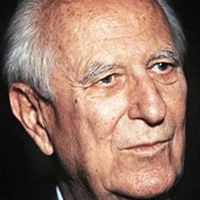
Gaston Defferre (1910–1986)
Defferre was not an immigrant but a native of the Var, who arrived in Marseille as a young lawyer in the 1930s and never left. He was elected mayor in 1953, and held the office continuously until his death in office 33 years later.
He was, by the standards of his time, a genuine progressive: a Resistance member during the German Occupation, a consistent opponent of the Algerian War within the Socialist Party, and the architect of the 1982 Decentralisation Laws that gave French regions and departments real political autonomy for the first time. He also ran the city with a paternalism that shaded into autocracy, maintained an extensive system of political patronage, and showed himself capable of casual racism when political circumstances seemed to warrant it.
The remarks to arriving pieds-noirs in 1962 have already been noted; in the 1970s, under pressure from a right-wing press campaign linking North African immigration to crime, he described mosques as breeding grounds for radicalism. The contradiction, progressive in national politics, exclusionary in municipal management, captures something true about the relationship between France’s left and its immigrant communities in the post-war period.
His legacy in Marseille is ambivalent, as large things often are. The city was transformed under his watch: its port was modernised, its university expanded, its cultural institutions built. The Quartiers Nord were also built under his watch, in the form they took. He is a necessary figure in any honest account of the city, because his ambivalences are Marseille’s ambivalences.

Cardinal Jean-Marc Aveline (born 1958)
Aveline was born in Sidi Bel Abbès, Algeria, on 26 December 1958, the son of French parents of Andalusian settler descent. He was four years old when his family fled at independence in 1962, joining the stream of pieds-noirs crossing the Mediterranean to a country they had never lived in. They settled in a working-class neighbourhood of Marseille. He has spent almost his entire life in the city since.
He was ordained a priest, became auxiliary bishop of Marseille in 2014, and was appointed Archbishop by Pope Francis in 2019. In 2022, Francis made him a Cardinal, placing on the shoulders of a man who had arrived in Marseille as a four-year-old refugee the red hat of the Church’s most senior rank. His elevation was widely understood in the context of his work: Aveline has made the pastoral care of Marseille’s immigrant communities, and the broader question of Mediterranean migration, the defining concerns of his ministry.
In September 2023, he persuaded Pope Francis, who had resisted visits to major Western European nations, to travel to Marseille to headline a conference of Mediterranean bishops and young people on migration, ecology, and peace. Francis had called the Mediterranean ‘the largest outdoor graveyard in Europe’, a reference to the thousands who die each year attempting the crossing from North Africa.
The conference, themed ‘Mosaic of Hope’, brought together representatives from 30 countries around the sea’s five shores. It was Aveline’s signature moment: a Marseille pied-noir who had grown up among the city’s immigrant communities convening the world’s Catholic Church in his city to confront the human consequences of the Mediterranean’s deadliness.
His stated position on immigration is carefully calibrated to resist the simplifications of both sides. He has rejected what he calls ‘irenic speech on welcome for everyone, without limits’ as a position that tends to be held by ‘people who don’t live in neighbourhoods that have to sustain these populations and situations’. He has equally rejected the ‘aggressive speech which always pronounces the migrant as universally guilty for all of the country’s problems.’ The ‘very, very delicate line of balance’ between the two is, he argues, the Church’s proper ground.
Following the death of Pope Francis in April 2025, Aveline was discussed as a potential successor ahead of the May conclave, under the informal nickname ‘John XXIV’, a reference to both the reform-minded spirit of the Second Vatican Council and a reported physical resemblance to John XXIII.
He was not elected; the conclave chose the American Cardinal Robert Francis Prevost, who took the name Leo XIV. Aveline was elected president of the French Bishops’ Conference in the same month. The man who arrived in Marseille as a child refugee from the end of French Algeria has become, in his sixties, the most prominent Catholic voice in France on the question of how Europe should treat those who cross the sea in search of safety.

Bruno Catalano (b. 1960)
Catalano was born in 1960 in Morocco into a Franco-Italian family that, according to their own account, traced part of their ancestry to Sephardic Jews expelled from Spain in the 15th century. These Jews later settled in Sicily before moving to North Africa, creating a lineage marked by displacement multiple times before Catalano's own migration began. He was ten when his family left Morocco for Marseille, around 1970.
He trained as an electrician and spent his twenties working at sea, including for the shipping line SNCM, before turning to sculpture in his thirties. Recognition came slowly: his first public commission, a bust of the singer Yves Montand for Marseille's 5th arrondissement, arrived only in 2001.

The series that would make him known, Voyageurs, travellers, suitcase in hand, had begun in 1995, but took on its now-signature fragmented form nine years later, in 2004, when a casting flaw tore a gap through the torso of a bronze figure. Instead of discarding the piece, Catalano made the rupture his method: each life-size traveller now walks with a section of the body missing, as though carrying, and leaving behind, some part of himself.
The series has since travelled far beyond Marseille, displayed on the waterfronts of Venice and the Amalfi Coast, among other locations. Catalano has described the suitcases his figures carry as full of "memories," calling his own journey from Morocco his "origins on the move," the clearest statement, from any figure in this article, of migration transforming into an artistic language of its own.

Zinédine Zidane (born 1972)
Zidane was born on 23 June 1972 in La Castellane, a housing estate in the 16th arrondissement of Marseille, one of the tougher corners of the city’s northern periphery. His parents were Algerian immigrants from the Berber-speaking Kabyle region, who had moved from Paris to Marseille in the 1960s in search of work. His father was a night-shift security guard at a department store. Zidane grew up playing football in the streets and the public squares of La Castellane, in a neighbourhood that was, and remains, one of the poorest in France.
He left Marseille as a teenager to join the youth academy at Cannes, and went on to become, by any reasonable measure, the greatest French footballer of his era and one of the greatest players in the history of the game. His career took him to Bordeaux, Juventus, and Real Madrid; he won the World Cup with France in 1998, scoring twice in the final against Brazil; he won the Ballon d’Or three times; he subsequently managed Real Madrid to three consecutive Champions League titles.
The 1998 World Cup victory had a political dimension that was impossible to ignore. Jean-Marie Le Pen had dismissed the French national team as ‘artificial’, the product of an immigration that had diluted the authentic French nation. The team that won the World Cup, multiracial, multicultural, drawn from the French Caribbean, West Africa, Armenia, and the housing estates of Marseille, was held up by France’s political centre as a living refutation of Le Pen’s thesis. A photograph of Zidane’s face projected onto the Arc de Triomphe after the final, beneath the words ‘Merci Zizou’, became one of the iconic images of late 20th-century France.
Zidane himself has been characteristically direct about his identity. He has described himself as ‘first, a Kabyle from La Castellane, then an Algerian from Marseille, and then a Frenchman’, a formulation that is less a denial of France than an insistence on the specificity of the route through which he arrived at it. He is, in the most literal sense, a child of Marseille’s immigration history: his parents’ story is the story of the Algerian workers who came to France in the 1960s; his own story is the story of what the second generation made of the city in which they grew up.
Epilogue
The French national anthem, La Marseillaise, was not written in Marseille. Its author, Claude Joseph Rouget de Lisle, wrote it in Strasbourg in 1792. The song took its name from militia volunteers from Marseille who sang it as they marched towards Paris.
The story ‘Marseille, an immigrant city’ is the third in our Immigrant Cities series, which also features Liverpool and Rotterdam. Please email the Editor if you wish to suggest other cities for the series ‘Immigrant Cities’.
Methodology: The article draws on information from EHNE (Encyclopédie d’histoire numérique de l’Europe); Springer Nature; Stanford Encyclopedia of Philosophy; Migration Policy Institute; Cairn.info; Refugee History; Smithsonian Magazine; National Geographic; Foreign Policy; France 24; Reuters; The Guardian; Wikipedia; College of Cardinals Report; Catholic News Service; OSV News; Crux; RTE News; Connexion France; World Population Review; Joshua Project; Thèses en ligne (HAL); New Left Review; Tandf Online (Journal of Ethnic and Migration Studies)
---------------------------------
We launched the series Immigrant Cities, starting with Liverpool, Rotterdam, Marseille (English), Marseille (French), New Orleans. and Buenos Aires. In the coming months, we will include other cities from Europe, the Americas, Asia, and Africa. Please contact the Editor if you would like to suggest cities with a captivating immigration history.
Further reading from The Immigrant Times: French immigrant footballers at the World Cup 2026 || Pakistani immigrant receives Order of Merit || A teenager’s journey from Western Africa to France ||

COMMENTS
FOLLOW